
Beyond the Add-to-Cart: Why Comparison Tables are the Secret Weapon of High-Growth Beauty Brands
When a customer lands on your Shopify store, you have approximately 15 seconds to convince them that your product is the right choice. In the crowded beauty and skincare space, 'choice' is often the biggest barrier to purchase. Should they buy the Vitamin C Serum or the Retinol Treatment? If the answer isn't clear, they won't buy either.
The Technical Shift: From Static Tables to OS 2.0 Dynamic Content
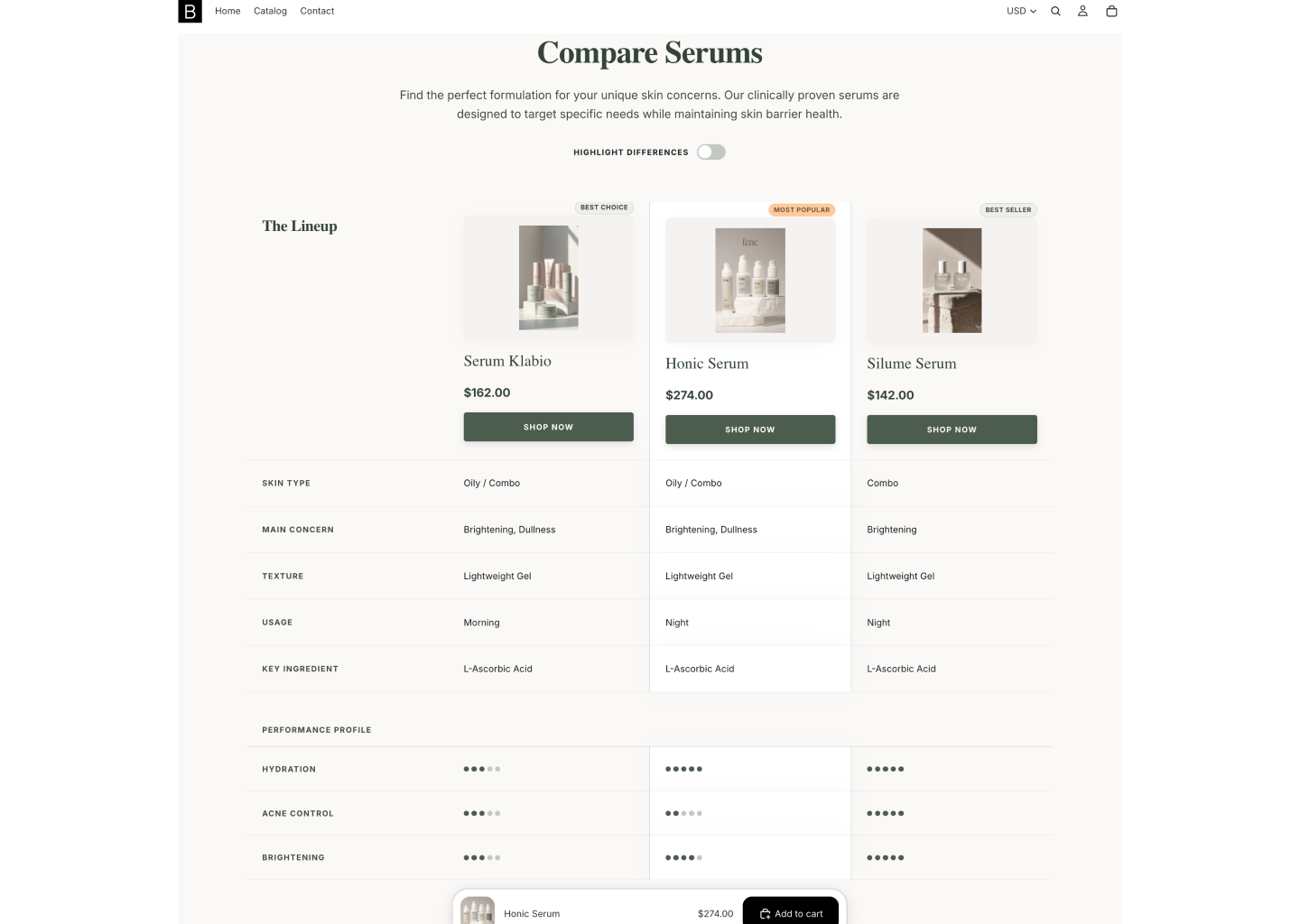
Legacy Shopify themes used to rely on hardcoded HTML for comparison tables. This was a nightmare to maintain. With Shopify OS 2.0, we can now leverage Product Metafields to automate this process.
By using a native Liquid section, your comparison data becomes part of your product database. When you add a new clinical trial result or change an ingredient list in your Shopify Admin, the comparison table on your storefront updates instantly. No more broken tables or outdated information.
UX Psychology: Reducing Cognitive Load
A well-designed comparison table does the 'thinking' for the customer. By aligning attributes like 'Best for', 'Key Active', and 'Texture' in a side-by-side view, you reduce the cognitive load required to make a decision. This leads to higher conversion rates and fewer customer support inquiries about product differences.
Performance First
Most merchants make the mistake of installing a dedicated 'Comparison App'. These apps often inject heavy scripts that slow down your store by 1-2 seconds. Our 'Liquid Glass' approach uses native Web Components, meaning the table loads as fast as your text, ensuring you keep your 100/100 Lighthouse score.